Top FMCG Brands Looking for Distributors in India | GrowDistributors
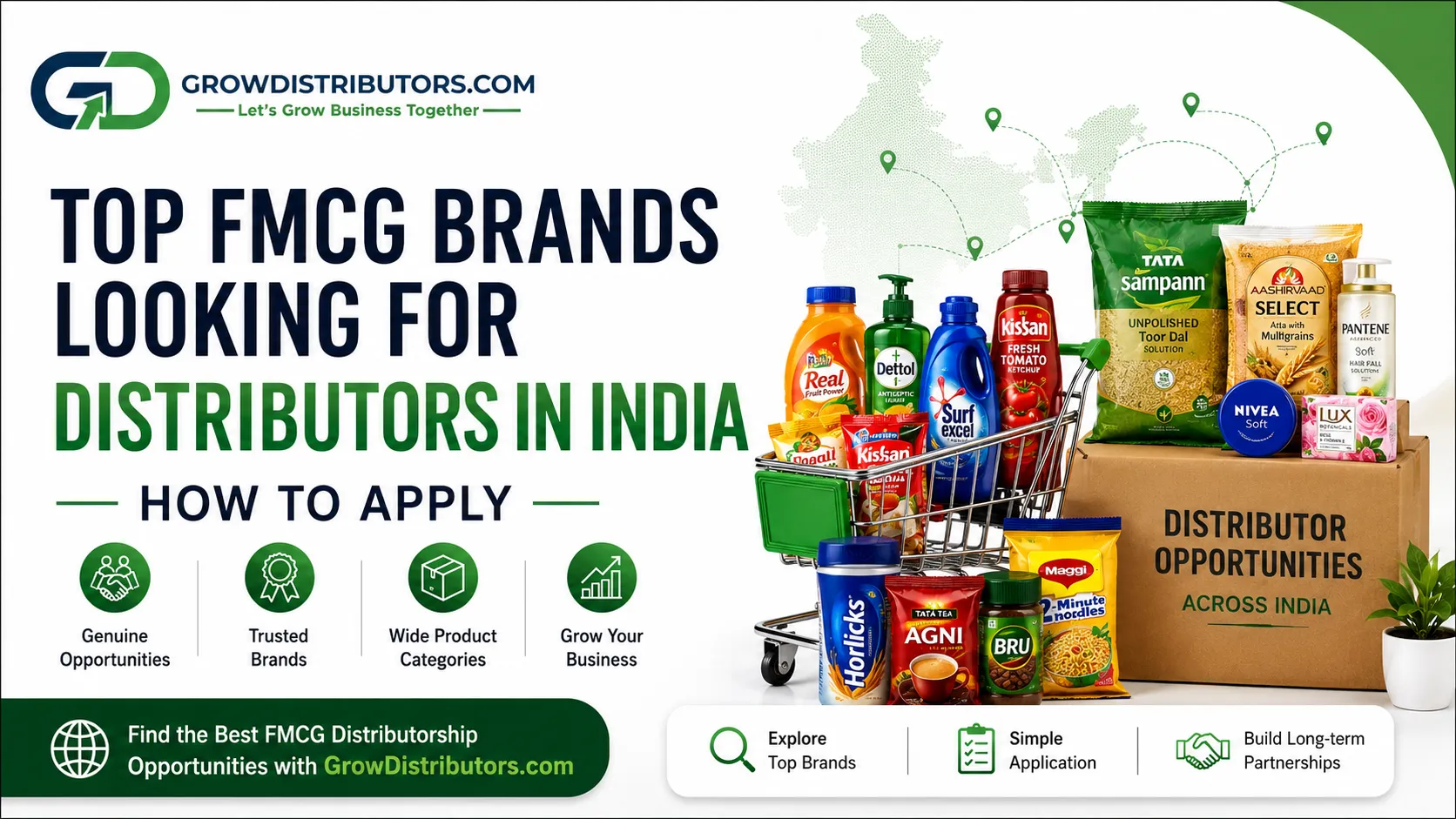
The FMCG industry in India continues to grow as consumers regularly purchase products such as food, beverages, personal care items, household essentials, and packaged goods. With products moving quickly from manufacturers to retailers and consumers, distribution plays a major role in the success of an FMCG brand.
For entrepreneurs and businesses, this creates an attractive opportunity to become a distributor and build a long-term distribution business. But finding the right brand can be challenging. Many manufacturers are actively looking for distributors, while new distributors often struggle to identify genuine FMCG distributorship opportunities.
This guide explains how to find FMCG brands looking for distributors in India, what manufacturers generally look for, and how you can apply for suitable distribution opportunities.
What Are FMCG Distribution Opportunities?
FMCG distribution involves purchasing or handling products from manufacturers or brands and supplying them to retailers, wholesalers, supermarkets, local stores, and other sales channels.
Typical FMCG categories include the following:
- Packaged food and beverages
- Personal care products
- Homecare and cleaning products
- Health and wellness products
- Grocery and daily-use products
- Baby care products
- Household essentials
Because these products have regular demand, FMCG remains one of the popular sectors for people searching for distributorship opportunities in India.
Why Are FMCG Brands Looking for Distributors?
An FMCG brand cannot always reach every market directly. Distributors help manufacturers expand their presence across cities, districts, and states.
Brands may be looking for distributors when they:
- Launch a new product
- Enter a new city or state
- Expand their retailer network
- Increase sales in an existing market
- Need better last-mile distribution
- Want to reach supermarkets, wholesalers, and local retailers
This is why searches such as FMCG distributor wanted, distributor needed, and distributors required for new products are becoming increasingly relevant for both manufacturers and entrepreneurs.
How to Find FMCG Brands Looking for Distributors in India
Finding the right opportunity is not simply about choosing a popular brand. You should look at the product category, market demand, investment requirements, margins, territory, and the support offered by the manufacturer.
1. Identify Your Preferred FMCG Category
Start by deciding which type of products you want to distribute.
For example, you could explore the following:
- Food products
- Beverages
- Personal care
- Homecare products
- Cleaning products
- Grocery products
Choosing a category that matches your existing network and local market knowledge can make distribution easier.
2. Research Available Distributorship Opportunities
Look for manufacturers and brands that are actively expanding their distribution network.
Platforms such as GrowDistributors can make this process easier by helping businesses discover appointing distribution opportunities and connect with companies looking for distributors.
Instead of contacting brands randomly, you can explore opportunities based on your interests and business requirements.
3. Check the Business Requirements
Before applying, understand the manufacturer's requirements.
These may include:
- Investment capacity
- Storage or warehouse requirements
- Distribution territory
- Retailer network
- Sales experience
- Logistics capabilities
- Working capital
Requirements can vary significantly from one company to another, so always review the opportunity carefully.
4. Compare Different Brands
Don't choose an opportunity only because the brand is well known.
Compare factors such as the following:
Product demand + profit potential + territory + investment + manufacturer support
A lesser-known brand with a strong product and good distribution support may sometimes be a better business opportunity than a highly established brand with intense competition.
5. Apply for the Opportunity
Once you find a suitable opportunity, submit your business details and contact information as requested by the manufacturer or distribution platform.
Be prepared to provide information about your location, business experience, available infrastructure, and market coverage.
What Do FMCG Companies Look for in a Distributor?
When an FMCG company searches for a distributor needed in a particular market, it generally wants a partner capable of developing that market.
Common requirements can include:
- Knowledge of the local market
- Existing retailer relationships
- Adequate storage facilities
- Delivery and logistics capabilities
- Financial capacity
- Sales and marketing capabilities
- Ability to maintain inventory
- Commitment to growing the brand
Having an established retailer network can be an advantage, but new entrepreneurs can also explore becoming distributor opportunities depending on the manufacturer's requirements.
How GrowDistributors Helps You Find FMCG Distributorship Opportunities
Finding genuine business opportunities can take considerable time when you search for brands individually.
GrowDistributors is designed to help manufacturers and distributors connect in one place. Distributors can explore available business opportunities, while manufacturers can look for suitable distribution partners to expand their market reach.
Whether you are an entrepreneur searching for FMCG distributor opportunities or a manufacturer looking for distributors for a new product, GrowDistributors can help simplify the discovery and connection process.
The platform can be particularly useful for businesses exploring different categories, including FMCG, food and beverages, homecare, personal care, electronics, and other product segments.
Things to Check Before Choosing an FMCG Distributorship
Before committing to any opportunity, do proper research.
Consider:
Product Demand
Is there genuine demand for the product in your target market?
Competition
How many similar products are already available in your area?
Investment
Understand the expected initial investment and working capital requirements.
Margins
Check the distributor margin and understand other possible costs.
Territory
Clarify whether you receive an exclusive or non-exclusive territory.
Manufacturer Support
Ask about marketing support, product training, promotional materials, and sales assistance.
Supply Chain
Make sure the manufacturer can maintain consistent product availability.
Is FMCG Distributorship Profitable in India?
FMCG distribution can be a promising business opportunity because many FMCG products have recurring demand. However, profitability depends on several factors, including product demand, margins, sales volume, operating costs, competition, territory, and inventory management.
Therefore, instead of assuming that every FMCG distributorship opportunity will be profitable, evaluate each business opportunity based on its actual commercial conditions.
How to Apply for FMCG Distributorship Opportunities
The basic process usually looks like this:
Find an opportunity → Check requirements → Evaluate the product → Submit your details → Discuss terms → Complete the required formalities → Start distribution
If you are actively searching for FMCG brands looking for distributors in India, keeping your business profile and relevant information ready can make the application process smoother.
Final Thoughts
The growing demand for everyday consumer products continues to create new FMCG distributorship opportunities in India. For entrepreneurs, becoming a distributor can provide an opportunity to work with growing brands and build a distribution network in their local market.
However, choosing the right opportunity is more important than simply choosing a famous brand. Evaluate the product, market demand, investment, margins, territory, competition, and manufacturer support before making a decision.
If you are looking for distributorship opportunities in India or a manufacturer searching for distributors, GrowDistributors can help you discover relevant opportunities and connect with potential business partners.
Frequently Asked Questions
1. How can I find FMCG brands looking for distributors in India?
You can search through manufacturer websites, business networks, industry platforms, and dedicated distributorship platforms such as GrowDistributors. Compare opportunities based on product category, location, investment, margins, and manufacturer requirements.
2. What is FMCG distributorship?
FMCG distributorship involves distributing fast-moving consumer goods from manufacturers or brands to retailers, wholesalers, supermarkets, and other sales channels.
3. How much investment is required for FMCG distributorship?
Investment varies depending on the brand, product category, territory, inventory requirements, warehouse facilities, and working capital. There is no single investment amount applicable to every FMCG distributorship.
4. Can a new entrepreneur become an FMCG distributor?
Yes. Some companies offer opportunities to new entrepreneurs, although requirements vary. Manufacturers may consider factors such as financial capacity, market knowledge, infrastructure, and the ability to develop a retailer network.
5. What should I check before taking an FMCG distributorship?
Check product demand, investment, distributor margins, territory, competition, inventory requirements, payment terms, logistics, and the level of support provided by the manufacturer.
6. Where can I find FMCG distributor opportunities?
You can explore manufacturer websites, industry networks, and Appointing distributorship platforms such as GrowDistributors to discover companies looking for distribution partners.
7. What is the difference between an FMCG distributor and a wholesaler?
An FMCG distributor generally works closely with a manufacturer or brand to distribute products within a defined market, while a wholesaler primarily purchases products in bulk and sells them to retailers or other businesses.
8. Are FMCG distributorship opportunities profitable?
They can be, but profitability depends on factors such as product demand, sales volume, margins, operating expenses, competition, territory, and inventory management. Every opportunity should be evaluated individually.