Furniture Distributorship in India: Full Business Guide
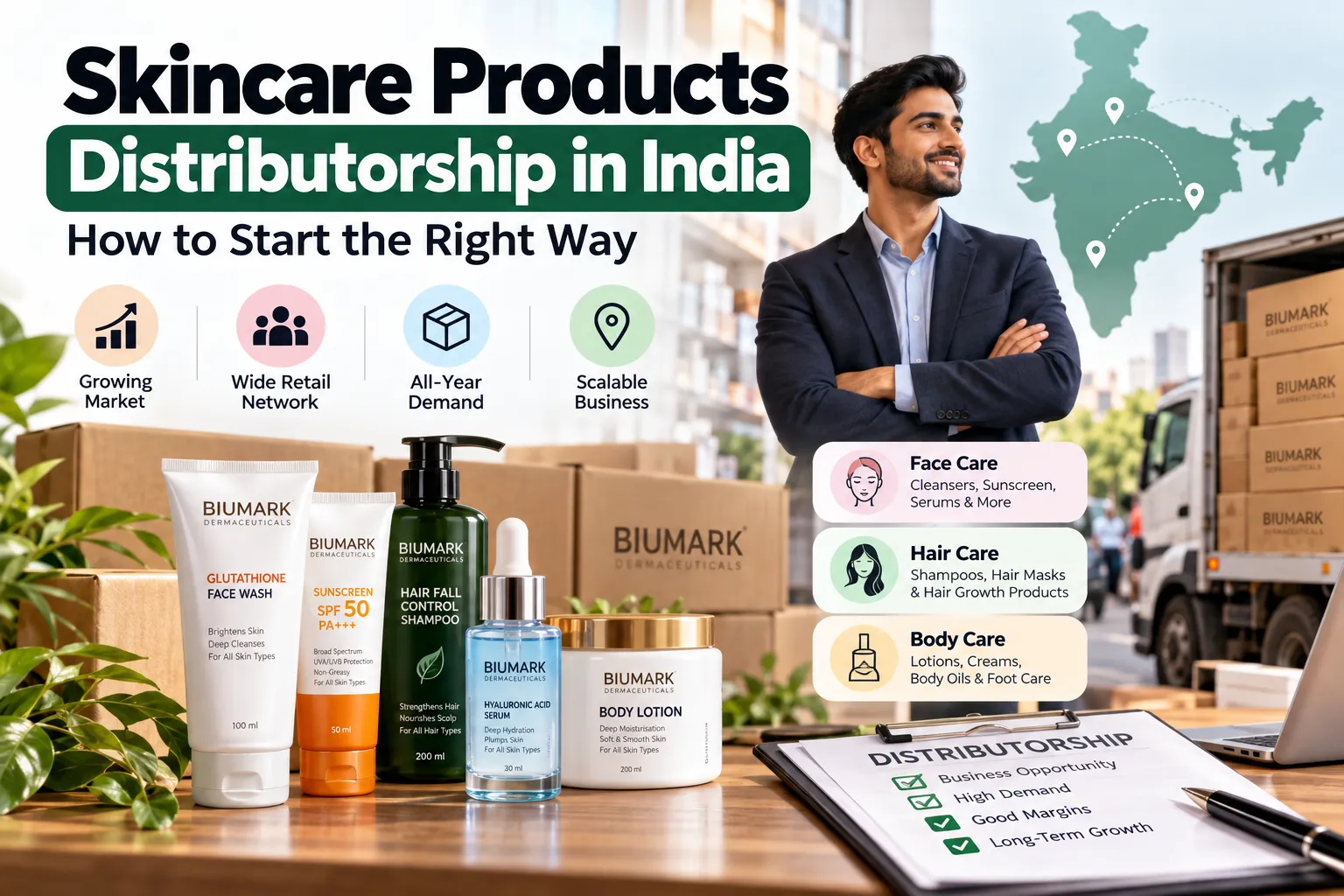
Skincare Products Distributorship in India: How to Start the Right Way
Skincare is no longer a luxury purchase. People now buy sunscreen, face wash, serums, and hair care products as part of their regular routine, and they buy them again and again. That repeat demand is why skincare product distributorship has become an attractive option for anyone who wants to build a business around products that sell throughout the year.
If you are thinking about becoming a skincare distributor, this guide explains how the business model works, what you should check before choosing a brand, what you need to get started, and how to build your distribution network.
Why Skincare Product Distributorship Is Growing in India
Consumers today are increasingly looking for products that solve specific problems such as acne, sun damage, pigmentation, oil control, hair fall, or dry skin.
The growth of online shopping and social media has also made customers more aware of different skincare and beauty brands. As a result, local retailers are looking to stock a wider range of products to meet changing customer demand.
Some of the key reasons why skincare distribution can be an attractive business model include:
- Repeat purchases: Skincare products are consumed regularly, so customers need to replace them after a certain period.
- Multiple retail channels: Products can be supplied to pharmacies, cosmetic stores, salons, clinics, beauty stores, and general stores.
- Easy storage: Most skincare products are relatively compact and easier to store than bulky products such as furniture or appliances.
- Scalability: You can begin by covering one city, district, or specific territory and gradually expand your retailer network.
- Wide product categories: A distributor can potentially supply face care, hair care, and body care products to the same retailers.
What Does a Skincare Distributor Do?
A skincare distributor purchases products in bulk from a brand or manufacturer and supplies them to retailers within a specific territory.
Unlike a retailer, the distributor generally does not focus on selling individual products directly to consumers. Instead, the distributor manages the supply chain between the brand and multiple retailers.
The main responsibilities of a distributor typically include:
- Purchasing and maintaining inventory
- Storing products properly
- Supplying products to retailers
- Managing deliveries
- Collecting payments from retailers
- Maintaining retailer relationships
- Monitoring fast-moving and slow-moving products
- Sharing retailer feedback with the brand
A strong distributor also understands local demand. Retailers are often the first to know which products customers are asking for, so their feedback can help distributors and brands understand what is working in the market.
Types of Skincare and Beauty Distributorship
Skincare distributorship is not limited to one type of product. Brands may specialize in one category or offer products across multiple segments.
1. Face Care
This category can include:
- Face cleansers
- Face washes
- Sunscreens
- Serums
- Moisturizers
- Acne-care products
- Oil-control products
- Face creams
2. Hair Care
Hair care products may include:
- Shampoos
- Hair masks
- Hair serums
- Hair-care treatments
- Hair-growth-related products
3. Body Care
Body care can include:
- Body lotions
- Body creams
- Body oils
- Foot-care products
- Other personal-care products
A haircare products distributorship and a cosmetic products distributorship can overlap, but they are not necessarily the same. Some brands focus exclusively on hair care, while others offer a broader beauty and personal-care range.
A brand offering face, hair, and body care products can potentially allow a distributor to supply multiple product categories to the same retailer.
What to Check Before Choosing a Skincare Brand
Choosing the right brand is an important part of starting a distribution business. Before making any investment, compare different companies and understand their terms clearly.
Company Details
Check whether the company provides verifiable business details, including:
- Registered business address
- Contact details
- GST information
- Official website
- Customer or distributor support
Product Information
Product packaging should clearly provide relevant information such as:
- Ingredients
- Batch number
- Manufacturing details
- Expiry date
- Product information required under applicable regulations
Product Classification
Ask the company how its products are classified. Cosmetics, personal-care products, and medicated products may have different regulatory requirements.
Do not assume that every skincare product requires the same license. Confirm the applicable requirements with the company and, where necessary, the relevant local authority.
Territory
Understand whether your distribution territory is exclusive.
Ask:
- Which areas are available?
- Can another distributor be appointed in the same area?
- Are there minimum sales targets?
- What happens if targets are not achieved?
Margin and Pricing
Ask the company to provide its pricing and distributor margin structure in writing.
Also check the brand's online pricing. If a company regularly sells products online at heavily discounted prices, it could affect the pricing structure for offline distributors and retailers.
Returns and Damaged Stock
Before placing your first order, understand the company's policy regarding:
- Damaged products
- Near-expiry products
- Expired products
- Manufacturing defects
- Unsold inventory
Marketing Support
Ask whether the company provides:
- Product catalogs
- Posters and promotional material
- Samples
- Digital creatives
- Sales support
- Product training
These resources can make it easier to introduce a new brand to retailers.
What You Need to Become a Skincare Distributor
The exact requirements vary from one company to another, but a distributor will generally need to prepare the following:
1. GST Registration and Business Documentation
You should have the appropriate business documentation and GST registration where applicable.
2. Applicable Product Licenses
Depending on the product category and classification, additional licenses or registrations may be required.
Always confirm the exact requirements for the products you plan to distribute rather than assuming that one license applies to every skincare product.
3. Storage Space
You need a clean and suitable storage area.
Products should generally be protected from:
- Excessive heat
- Direct sunlight
- Moisture
- Poor handling
4. Working Capital
You need enough capital to purchase your initial inventory and manage the payment cycle.
This is particularly important if retailers purchase products on credit.
5. Retailer Network
Having existing relationships with pharmacies, cosmetic stores, salons, clinics, or general stores can help you get started faster.
If you don't already have a retailer network, you should have a clear plan for building one.
6. Delivery Arrangement
You should have a reliable system for delivering products to retailers. Depending on your territory, this could involve your own vehicle, delivery staff, or a logistics/courier partner.
Meet Biumark: A Delhi-Based Skincare, Haircare and Body Care Brand
Biumark is a skincare, haircare, and body-care brand from Biumark Dermaceuticals Pvt. Ltd., based in Delhi.
Its product range covers multiple personal-care categories, including face care, hair care, and body care, with products across areas such as sun protection, oil control, cleansers, shampoos, serums, and body care.
For a distributor, having products across multiple categories can make it possible to approach different types of retailers with a broader product portfolio instead of managing several separate suppliers.
Before becoming a distributor, however, it is important to discuss the available territory, investment requirements, product range, margins, targets, and applicable terms directly with the company.
How to Start a Skincare Products Distributorship: Step by Step
Starting the business becomes easier when you approach it systematically.
Step 1: Choose Your Target Area
Decide which city, district, or territory you want to cover.
Also identify the type of retailers you want to target, such as pharmacies, cosmetic stores, salons, clinics, and general stores.
Step 2: Shortlist Brands
Compare multiple brands rather than choosing the first company you find.
Look at:
- Product range
- Pricing
- Margins
- Territory
- Minimum order quantity
- Retail demand
- Marketing support
- Return policy
Step 3: Request Complete Information
Ask the company for product catalogues, pricing, distributor terms, applicable licenses, minimum order requirements, and other relevant information.
If possible, request samples before making a significant inventory investment.
Step 4: Understand the Agreement
Read the distributor agreement carefully.
Pay particular attention to:
- Territory
- Sales targets
- Payment terms
- Minimum order requirements
- Exclusivity
- Returns
- Damaged stock
- Termination conditions
Do not rely only on verbal promises. Important commercial terms should be documented.
Step 5: Prepare Your Infrastructure
Set up your storage space, inventory system, delivery arrangement, billing process, and retailer database before placing a large order.
Step 6: Start Building Your Retailer Network
Begin with a manageable number of retailers.
Introduce the products, explain their features, collect feedback, and monitor which products are moving quickly.
Step 7: Scale Gradually
Once you understand the demand in your territory, you can gradually expand your retailer network and product range.
The goal should be to build repeat retailer orders, not simply to purchase a large amount of stock.
Common Mistakes to Avoid
New distributors can make expensive mistakes if they focus only on the initial margin and ignore inventory management.
Ordering Too Much Stock
Do not purchase a large quantity before understanding local demand. Start with products that have a realistic chance of selling in your territory.
Ignoring Expiry Dates
Skincare products have shelf lives. Poor inventory management can result in expired or slow-moving stock.
Maintain proper stock rotation and monitor expiry dates regularly.
Giving Excessive Credit
Retailer credit can help build relationships, but excessive credit can create cash-flow problems.
Set clear payment terms and monitor outstanding payments.
Signing Without Reading the Agreement
Understand the territory, targets, margins, payment terms, returns, and other conditions before signing.
Choosing an Unverified Company
Always verify the company's business details, product information, contact details, and documentation before investing.
Interested in Skincare Distributorship With Biumark?
If you are interested in exploring a skincare products distributorship with Biumark, contact the Biumark team through the details available on biumark.in.
When contacting the company, share useful information such as:
- Your city and territory
- Existing retailer network
- Business experience
- Available investment budget
- Product categories you are interested in
This can help the company understand your requirements and explain the distribution opportunities available in your area.
Frequently Asked Questions
How much investment is needed for a skincare products distributorship?
The investment depends on the brand, territory, product range, minimum order quantity, and size of your initial inventory. Ask the company for the exact investment requirements and commercial terms in writing before committing.
Do I need a license to become a skincare distributor?
You will generally need the appropriate business and tax registrations, including GST where applicable. Additional requirements can depend on how the products are classified and the applicable regulations. Confirm the requirements for your specific product range with the company and relevant authorities.
Is skincare distributorship profitable?
Skincare products can have repeat demand, but profitability depends on factors such as purchase price, selling price, distributor margin, sales volume, inventory management, expiry control, and retailer payment cycles.
No company can legitimately guarantee a fixed profit without considering these factors.
Who can I sell skincare products to as a distributor?
Potential buyers can include:
- Pharmacies
- Cosmetic stores
- Beauty stores
- Salons
- Clinics
- General stores
- Other relevant retailers in your territory
What is the difference between a distributor and a retailer?
A distributor purchases products in larger quantities from a brand or manufacturer and supplies them to multiple retailers within a territory.
A retailer generally purchases products from distributors or brands and sells them directly to the final customer.
How do I become a distributor for Biumark?
You can contact the Biumark team through the phone, WhatsApp, or email details available on biumark.in. Share your city, retailer network, and budget, and ask the company about the current distributorship opportunities and terms available in your area.