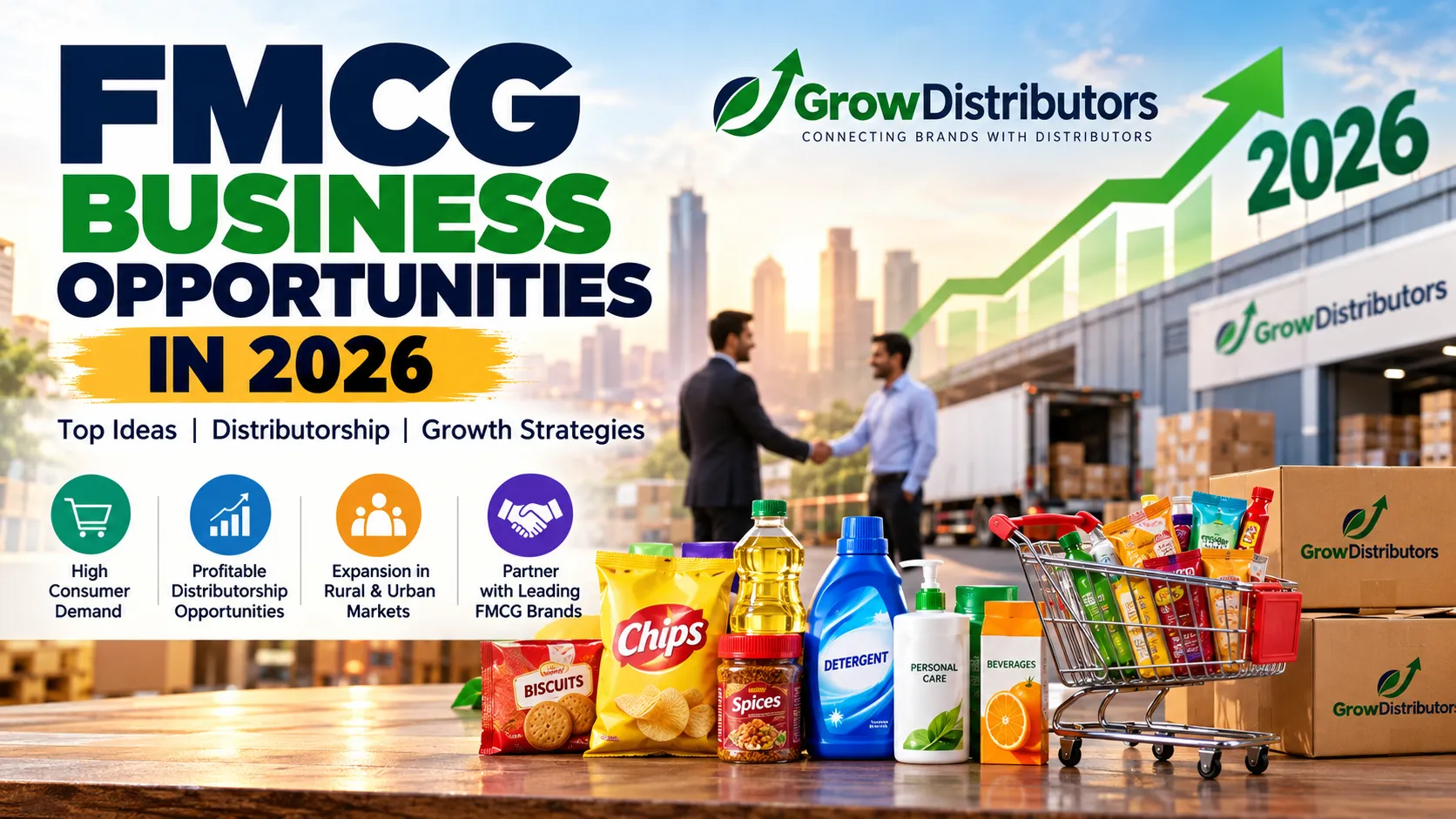
FMCG Business Opportunities in 2026: Best Ideas, Distributorship and Growth Strategies in India
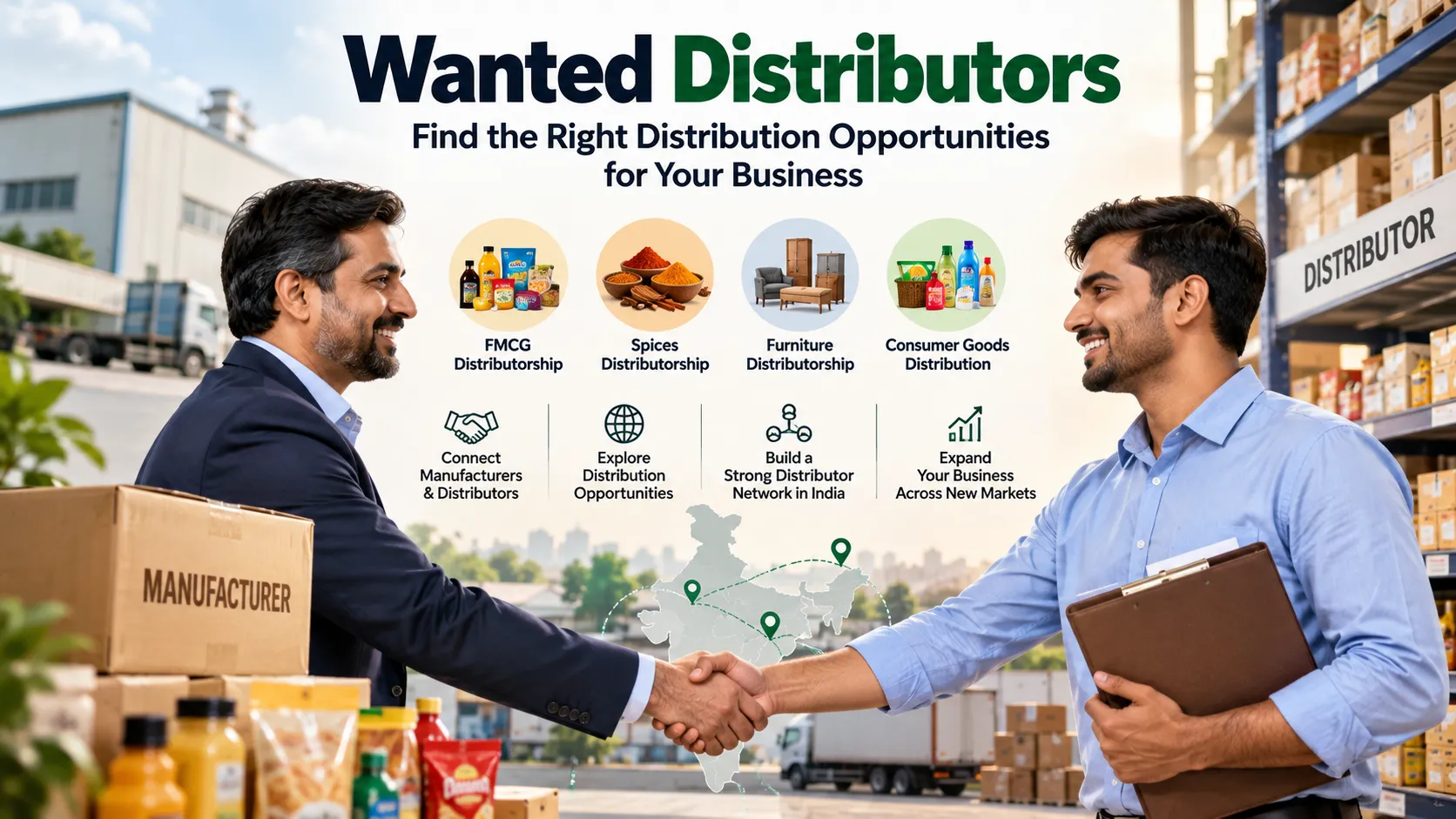
Are you looking for profitable business opportunities in India in 2026? The Fast-Moving Consumer Goods (FMCG) sector is worth exploring if you want to build a business around products that people purchase regularly. From packaged food and spices to beverages, personal care products, and household cleaning supplies, FMCG products serve everyday consumer needs.
For entrepreneurs, wholesalers, retailers, and aspiring business owners, FMCG business opportunities in 2026 offer several possible entry points, including product distribution, wholesale trading, regional brand partnerships, and private-label businesses.
The opportunity is not limited to large cities. Smaller towns, semi-urban markets, and rural areas can also offer potential for businesses that understand local demand, pricing, retailer relationships, and efficient product delivery.
However, starting an FMCG business requires more than selecting a popular product. You need to evaluate the investment, competition, product demand, distribution network, and working capital required to operate sustainably.
Platforms such as GrowDistributors can help manufacturers, brands, and aspiring distributors explore business connections and distribution opportunities.
In this guide, we will explore the best FMCG business ideas for 2026, how to start an FMCG distributorship, the factors to consider before investing, and how to find suitable business opportunities.
What Is an FMCG Business?
FMCG stands for Fast-Moving Consumer Goods. These are products that consumers purchase frequently and generally use or replace within a relatively short period.
Common FMCG product categories include:
- Packaged food, biscuits, snacks, and confectionery
- Spices, masalas, sauces, and packaged grocery products
- Tea, coffee, juices, and other beverages
- Soaps, shampoos, skincare, and personal hygiene products
- Detergents, floor cleaners, and household cleaning supplies
- Baby care and everyday personal care products
- Packaged staples and other frequently purchased essentials
An FMCG business can operate through several models. You can manufacture your own products, become an authorized distributor, purchase products wholesale for resale, or develop a private-label brand.
For beginners who do not want to establish a manufacturing facility, an FMCG distributorship or wholesale business may be a practical starting point, depending on their capital and local market conditions.
Why Explore FMCG Business Opportunities in 2026?
The FMCG sector continues to evolve as consumers discover new brands, shopping channels expand, and manufacturers seek better access to local markets.
Recent industry reporting highlights both opportunities and challenges. In October 2026, reporting on India's consumer goods sector pointed to revenue growth alongside pressure from rising raw-material costs. This makes demand forecasting, inventory control, and pricing discipline especially important for distributors. Source: Financial Express.
Here are some factors worth considering when evaluating the sector.
1. Regular Demand for Everyday Products
Many FMCG products are used daily or weekly. Retailers therefore need dependable suppliers who can replenish stock and deliver products consistently.
Products with repeat purchases can help businesses build recurring retailer relationships, although actual sales depend on product quality, pricing, competition, and local demand.
2. Opportunities in Small Towns and Rural Markets
Consumers in smaller towns and rural markets purchase a wide range of packaged foods, household essentials, personal care products, and regional brands.
Businesses that understand local preferences and offer suitable pack sizes and price points may identify underserved markets.
For example, a distributor serving a district with numerous kirana stores could evaluate demand for regional snacks, spices, biscuits, and home care products.
3. New and Regional Brands Need Distribution
Emerging manufacturers often need help reaching retailers beyond their existing customer base.
A strong local distributor can support market expansion through retailer acquisition, stock management, order fulfillment, and local sales relationships.
This creates potential opportunities for entrepreneurs interested in FMCG company distributorship and regional brand partnerships.
4. Growth of Digital Business Connections
Digital platforms make it easier to research manufacturers, discover business opportunities, and connect with potential partners.
For manufacturers, online visibility can support distributor acquisition. For aspiring distributors, it can help identify brands and product categories worth evaluating before approaching companies.
Top 8 FMCG Business Opportunities in 2026
The best FMCG business depends on your available capital, location, product knowledge, and ability to serve customers. The following categories are worth researching before making an investment.
1. Packaged Food Distributorship
Packaged food is a broad category that includes biscuits, namkeen, chips, noodles, ready-to-eat products, confectionery, and other convenience foods.
These products may appeal to distributors because they serve different types of retailers, including kirana stores, supermarkets, canteens, and local wholesalers.
Business opportunities include:
- Becoming a packaged food distributor
- Supplying snacks and biscuits to retail stores
- Distributing regional food brands
- Building a wholesale network for packaged grocery products
Before selecting a brand, check product shelf life, packaging quality, retailer margins, sales velocity, and expiry-return policies.
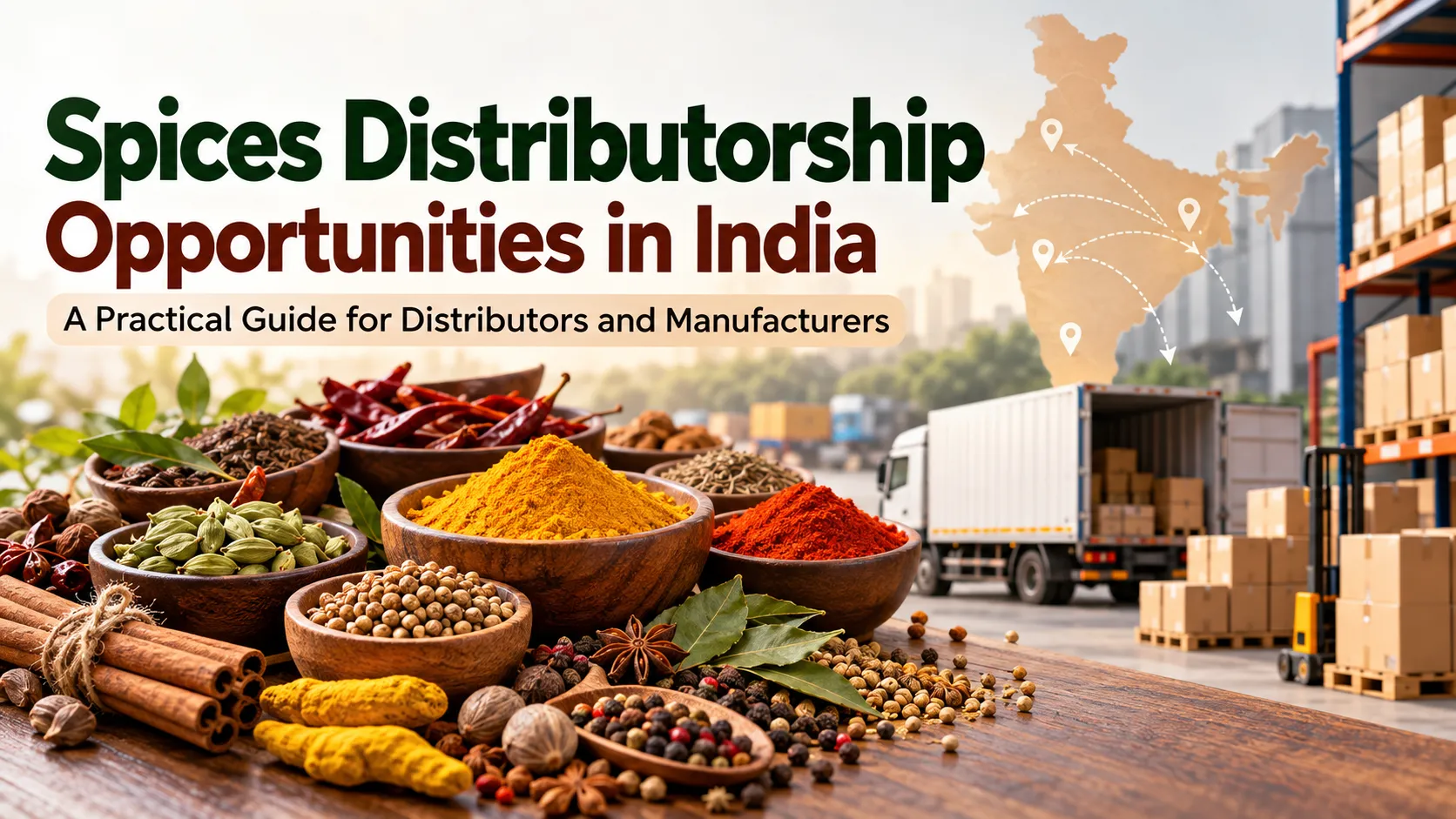
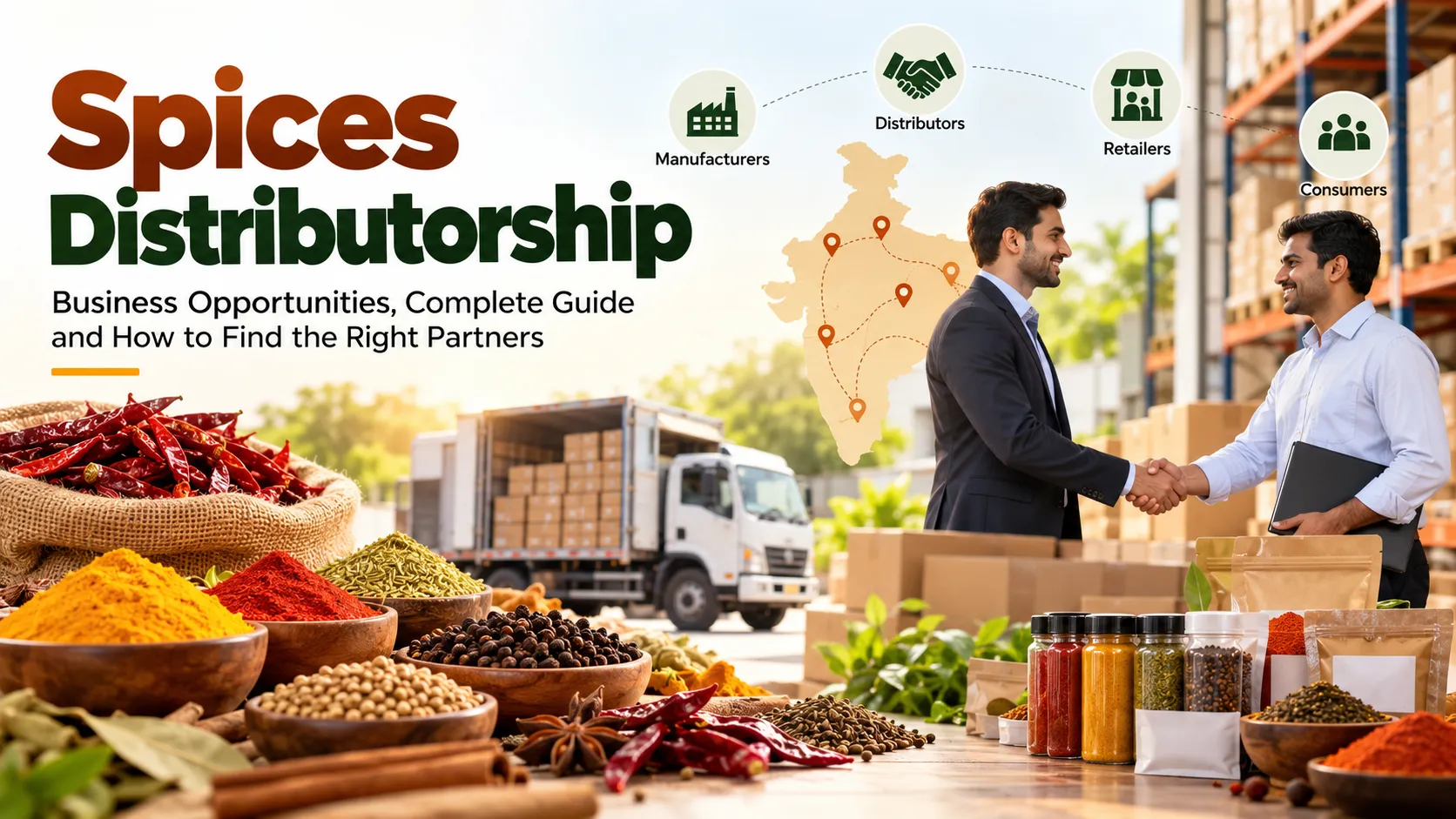
2. Spices and Masala Distribution
Spices and masalas are essential ingredients in Indian households, making them a category worth exploring for regional and national distribution.
You can consider packaged turmeric, chili powder, coriander powder, garam masala, blended spices, and other cooking ingredients.
Regional brands may offer opportunities to serve retailers that prefer products suited to local tastes and price expectations.
To evaluate a spice distributorship, check food-safety compliance, packaging standards, product consistency, shelf life, and competition from established brands.
3. Personal Care Products Distribution
Personal care products include soaps, shampoos, toothpaste, skincare products, deodorants, and hygiene essentials.
Entrepreneurs can explore distribution partnerships with established manufacturers as well as emerging brands.
A potential advantage of this category is the variety of products and price points available for different customer segments. However, competition can be intense, and product demand may vary significantly by market.
4. Home Care and Cleaning Products
Household cleaning products are another category to consider when evaluating FMCG distribution opportunities.
Products include detergents, dishwashing liquids, toilet cleaners, floor cleaners, and other household hygiene essentials.
A distributor can explore supplying local retailers, supermarkets, cleaning-product wholesalers, and selected institutional buyers.
Before entering this category, compare product effectiveness, packaging, transport requirements, retailer demand, and the cost of serving your assigned territory.
5. Beverages and Packaged Drinks
Tea, coffee, packaged juices, bottled drinks, and other non-alcoholic beverages can create opportunities for distributors.
Some products experience seasonal changes in demand, while others have relatively steady purchasing patterns.
Check whether a potential distributorship requires refrigerated storage, specialized transportation, or additional equipment. These requirements can materially affect the investment and operating costs.
6. Health-Focused and Better-for-You Packaged Foods
Some consumers seek products such as millet-based snacks, healthier packaged alternatives, and products with clearly communicated nutritional information.
Entrepreneurs can research emerging brands in these categories but should validate actual demand instead of relying only on market trends.
Review product claims, applicable food regulations, shelf life, pricing, and repeat-purchase behavior before investing in inventory.
7. Regional FMCG Brand Distribution
Regional brands may be attractive to distributors who understand their local markets.
For example, a brand producing snacks, pickles, spices, or packaged staples may need a distributor to reach retailers across a town or district.
You can approach manufacturers that are actively expanding their distribution networks and evaluate whether they offer suitable territory rights and sales support.
Important: Do not assume a brand is offering distributorship in your location until its authorized representative confirms availability and terms.
8. FMCG Wholesale and Multi-Brand Distribution
Instead of depending on a single manufacturer, some entrepreneurs operate as multi-brand wholesalers, purchasing products from multiple suppliers and selling them to retailers.
This model may provide flexibility in product selection, but it also requires careful supplier management, stock planning, and credit control.
A multi-brand business should focus on products that complement each other and can be delivered efficiently to the same customer base.
FMCG Distributorship vs. FMCG Wholesale Business
Understanding the difference between these business models can help you choose the right starting point.
| Factor | FMCG Distributorship | FMCG Wholesale Business |
|---|---|---|
| Supplier relationship | Usually appointed by a manufacturer or brand | Purchases from one or more suppliers |
| Territory | May have an assigned territory | Depends on supplier terms and customers |
| Product range | Often defined by the brand | Can include multiple brands |
| Sales focus | Brand development and retailer coverage | Product availability and wholesale sales |
| Investment | Depends on stock, territory, and company requirements | Depends on inventory and working capital |
| Main challenge | Achieving sales targets and managing brand inventory | Managing supplier prices, competition, and stock turnover |
Neither model guarantees profitability. Choose the one that fits your resources, supplier access, and ability to serve retailers.
How to Start an FMCG Distributorship Business in 2026
Starting an FMCG distribution business requires a structured approach. Follow these steps to evaluate opportunities before committing your money.
Step 1: Select Your Product Category
Begin with one or two categories that you understand and that have realistic demand in your target market.
For example, you might research packaged snacks, spices, home care products, or personal care items.
Study competing brands, local retail prices, consumer preferences, and the number of potential retailers in your area.
Step 2: Research FMCG Companies Offering Distributorship
Create a shortlist of manufacturers and brands that match your chosen category.
Review their product range, company background, market presence, distribution requirements, and official contact information.
You can also explore platforms such as GrowDistributors to discover potential business connections between manufacturers, brands, and distributors.
Always verify the company and its current distributorship terms before making a payment.
Step 3: Calculate Your Total Investment
Your investment may include:
- Initial inventory and opening stock
- Warehouse rent or storage arrangements
- Transportation and delivery expenses
- Employee salaries, if required
- Billing software and business administration
- GST and other applicable compliance costs
- Working capital for day-to-day operations
There is no single investment amount suitable for every FMCG distributorship. Requirements vary according to the product category, brand, location, stock volume, and company policy.
Keep sufficient working capital after purchasing opening stock. A business can struggle even when sales are growing if too much money remains tied up in inventory or unpaid retailer invoices.
Step 4: Complete the Required Registrations
Depending on your business structure and products, you may need applicable business registrations, GST registration, food-related licences, and other permissions.
For example, businesses dealing in food products should check applicable FSSAI requirements. GST obligations depend on the nature and scale of the business and the relevant legal provisions.
Consult the appropriate authorities or a qualified professional to confirm the requirements for your specific business.
Step 5: Arrange Storage and Transportation
Choose storage facilities that suit the products you plan to distribute.
Food products may require particular attention to hygiene, pest control, temperature, and expiry dates. Other products may need protection from moisture, heat, or packaging damage.
Plan delivery routes around retailer locations to reduce unnecessary transportation costs and improve order fulfilment.
Step 6: Build Your Retailer Network
An FMCG distributor needs reliable relationships with retailers and other buyers.
Identify suitable kirana stores, supermarkets, wholesalers, and institutional customers. Understand their preferred brands, order quantities, delivery schedules, and payment expectations.
Start with realistic sales targets and expand coverage as repeat orders develop.
Step 7: Track Sales and Inventory
Use a billing or inventory-management system to monitor purchases, sales, stock levels, outstanding payments, expiry dates, and product returns.
Review your performance regularly.
Pay particular attention to slow-moving stock, overdue payments, and products that generate low returns after delivery and operating costs.
How to Evaluate an FMCG Distributorship Before Investing
A popular brand name does not automatically make a distributorship a good business.
Use the following checklist when comparing FMCG distributorship opportunities in India.
| Evaluation factor | What to check |
|---|---|
| Product demand | Evidence of actual demand and repeat orders |
| Investment | Opening stock, deposits, infrastructure, and working capital |
| Distributor margin | Written margin structure and applicable schemes |
| Territory | Geographic rights and any restrictions |
| Sales targets | Minimum purchase and sales requirements |
| Inventory | Shelf life, stock rotation, and return policies |
| Payment terms | Supplier credit and retailer collection cycles |
| Company support | Training, marketing, logistics, and sales assistance |
| Competition | Existing brands, prices, and retailer relationships |
| Legal terms | Agreement, termination conditions, and dispute process |
Ask for written details instead of relying on verbal promises. Be cautious of guaranteed-income claims, pressure to pay immediately, and unusually large mandatory opening-stock orders.
How GrowDistributors Can Help Manufacturers and Distributors
Finding the right business partner is an important part of building a distribution network. Manufacturers need access to suitable distributors, while aspiring distributors need to discover brands and product categories that fit their business goals.
GrowDistributors is a B2B platform focused on connecting manufacturers, brands, and distributors and helping businesses explore distribution opportunities.
Through its website, businesses can research potential partnerships and explore ways to expand their distribution reach.
Benefits for Manufacturers and Brands
- Improve online visibility for distribution opportunities.
- Reach potential distributors interested in specific product categories.
- Support expansion into new geographic markets.
- Present product information and business opportunities to prospective partners.
- Explore digital marketing and online lead-generation opportunities.
Benefits for Aspiring Distributors
- Explore potential manufacturer and brand connections.
- Research products that may fit their local market.
- Compare business opportunities before contacting suppliers.
- Identify brands to approach for territory-specific distribution discussions.
GrowDistributors can be a starting point for discovering business connections. However, users should independently verify manufacturers, product demand, commercial terms, and territory availability before investing.
Looking for FMCG distributorship opportunities? Visit GrowDistributors.com to explore potential business connections and distribution opportunities.
Common Mistakes to Avoid in the FMCG Business
Even products with regular demand can become unprofitable when a distribution business is poorly managed.
Avoid these common mistakes:
1. Choosing a brand without market research: A recognised brand may already have strong competition or limited demand in your territory.
2. Investing all your money in stock: Inventory alone does not run a business. You also need money for transport, operating expenses, and delayed payments.
3. Ignoring retailer credit: Excessive credit can create cash-flow problems even when sales figures look impressive.
4. Overestimating distributor margins: Gross margin is not the same as net profit. Deduct delivery costs, salaries, rent, financing costs, losses, and other expenses.
5. Ignoring expiry and damaged products: Understand the company's written policies before accepting perishable or short-shelf-life inventory.
6. Failing to track inventory: Slow-moving products tie up working capital and can increase the risk of expiry or markdowns.
7. Trusting unverified business offers: Verify company registration, official contacts, agreements, bank details, and any distributorship fee before paying.
Future Scope of the FMCG Business in India
FMCG distribution is likely to continue evolving as brands expand into new markets, consumers adopt different shopping habits, and manufacturers improve their distribution systems.
Three areas deserve particular attention.
Digital Distribution and Business Discovery
Online business platforms can help manufacturers present their offerings and connect with potential channel partners. Distributors can use these platforms as part of a broader research process.
Regional and Emerging Brands
Regional manufacturers may seek partners who understand local retailers, customer preferences, and delivery requirements.
For distributors, this creates opportunities to evaluate brands that are not yet widely available in their markets.
Efficient, Data-Driven Distribution
Inventory tracking, digital billing, route planning, and timely payment collection can help distribution businesses improve operational efficiency.
In a competitive market, sustainable growth depends on serving customers reliably while controlling costs—not simply increasing the volume of products purchased.
Conclusion
FMCG business opportunities in 2026 span packaged food, spices, personal care, home care, beverages, regional brands, wholesale trading, and product distribution.
The right opportunity depends on your budget, market demand, supplier terms, and ability to manage inventory and retailer relationships. Before investing, research the product category, compare manufacturers, calculate working capital, and verify all commercial agreements.
If you are a manufacturer looking to expand your reach or an entrepreneur exploring FMCG distributorship opportunities in India, GrowDistributors can help you explore potential connections between brands and distributors.
Start with market research, choose a suitable business model, and focus on building a distribution business that can grow sustainably.
Frequently Asked Questions (FAQs)
1. What are the best FMCG business opportunities in 2026?
Potential opportunities include packaged food distribution, spices and masala distribution, personal care products, home care products, beverages, regional FMCG brands, and multi-brand wholesale trading. The best choice depends on local demand, competition, capital, and supplier terms.
2. Is FMCG distributorship profitable in India?
FMCG distributorship can be profitable when product demand, inventory turnover, retailer coverage, and operating costs are managed effectively. Profitability is not guaranteed, and actual results depend on the brand, territory, margins, competition, and working-capital requirements.
3. How much investment is required to start an FMCG distributorship?
There is no fixed investment amount. Costs depend on the product category, brand requirements, opening stock, storage, transportation, and working capital. Obtain a written estimate from the manufacturer and calculate your operating costs before committing funds.
4. How can I find FMCG companies offering distributorship?
Research manufacturers in your preferred category, visit their official websites, and contact their authorised sales teams. You can also explore GrowDistributors.com to discover potential business connections and distribution opportunities. Confirm current territory availability directly with the company.
5. Which FMCG products are best for distribution in small towns?
Packaged snacks, biscuits, spices, packaged grocery products, detergents, soaps, and other everyday essentials may be worth researching. Select products based on local consumer preferences, retailer demand, competing brands, and price sensitivity.
6. Can I start an FMCG business without manufacturing products?
Yes. You can explore authorised distributorships, wholesale trading, or other permitted resale models without establishing your own manufacturing facility. Your responsibilities will depend on the business model and supplier agreement.
7. What documents are required for an FMCG distributorship?
Requirements vary by company and product category. Commonly requested documents may include identity and address proof, business registration details, GST information where applicable, bank details, and evidence of suitable storage facilities. Food-related businesses should also check applicable FSSAI requirements.
8. How does GrowDistributors help businesses?
GrowDistributors focuses on connecting manufacturers, brands, and distributors. Businesses can use the platform to explore potential distribution connections and improve their visibility to prospective partners. Specific services, eligibility, and commercial terms should be confirmed directly on the website.
9. What is the difference between an FMCG distributor and a wholesaler?
An FMCG distributor is generally appointed by a manufacturer or brand to supply products within an agreed territory or channel. A wholesaler usually purchases products from suppliers and resells them to retailers or other businesses, often handling multiple brands.
10. How can I choose a genuine FMCG distributorship opportunity?
Verify the manufacturer, check product demand, review the distributor agreement, confirm margins and sales targets in writing, and understand return and payment policies. Never rely solely on promised profits or pay an unverified party without proper checks.